Fellow writers, in these pandemically, financially-challenging times, here–courtesy of BookBub–is your ticket to a writers conference and you can keep your bunny slippers on the whole time. [Hey, guy-writers, I’m not judging…]
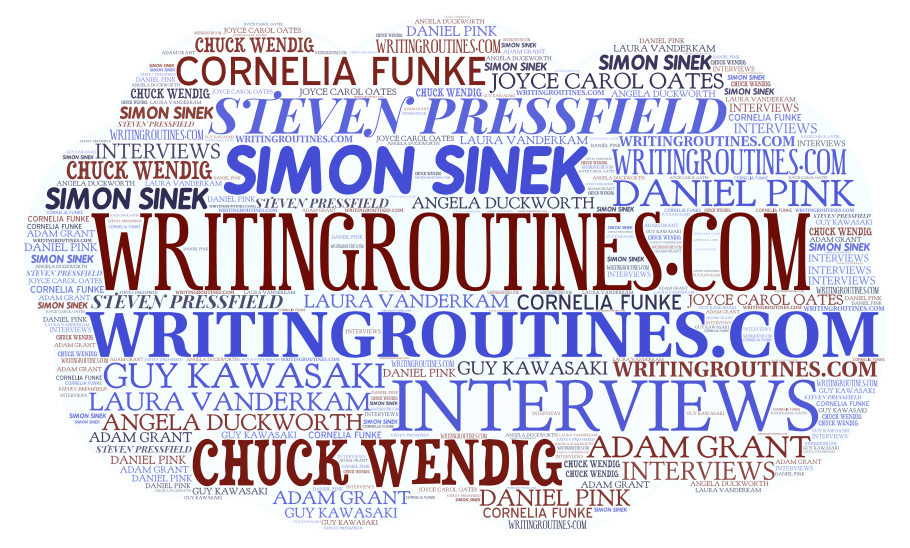
The word cloud above supplies most of the topics. Check it out and run the sessions in the background while you’re baking writer’s block brownies for your self-selected ‘intermission’. Don’t forget the Italian roast, though I know some writers from the great state of Virginia prefer tea. ;-]
It is packed with concepts and ideas that I hadn’t before run across.
Brooks introduced me to ‘mirror neurons’, which “fire both when an animal acts and when the animal observes the same action performed by another.” [Wikipedia]
Okay, where does Quentin Tarantino come in? From Tarantino’s 2013 Oscar acceptance speech: “You guys [friends] don’t realize how important you are to my process. I don’t want input; I don’t want you to tell me if I’m doing anything wrong. Heavens forbid. But, I write a scene and I think I’ve heard it as much as I can, but then when I read it to you – I don’t give it to you to read, I read it – but when I read it to you, I hear it through your ears. And it lets me know I’m on the right track.”
As he reads, then, Tarantino’s mirror neurons fire and he picks up the listeners’ reactions to his work.
What does that mean for the rest of us who are not quite chalking up multiple Oscars?
Take that one extra step beyond reading your work aloud–find an audience who follows the rule of: No feedback, please! Brooks justifies this rule with his observation that people often don’t effectively express their impressions and misguided feedback may well lead you to the toss the whole project.
Brooks closes with this: “You want to know what youthink about your work as a first-time reader, not someone else.”
Considering our current pandemic conditions, you may be relegated to telepathic writing over the phone. Hey, it’s called playing the cards we’re dealt, right?
I also tried recording a piece of my writing aloud–and then listening to that recording. I’m not sure if that recreated the mirror-neurons experience, but I will try it again. It does add some distance between yourself and your work.
So, give it a try.
Let me know how telepathic writing worked for you.
I’m thinking this list would work for prose, as well. Come to think of it, much of this applies to writing in general. But hey, that’s just me probably overthinking…
The most important thing is you can’t write what you wouldn’t read for pleasure. It’s a mistake to analyze the market thinking you can write whatever is hot. You can’t say you’re going to write romance when you don’t even like it. You need to write what you would read if you expect anybody else to read it. And you have to be driven. You have to have the three D’s: drive, discipline and desire. If you’re missing any one of those three, you can have all the talent in the world, but it’s going to be really hard to get anything done. — Nora Roberts
I’m currently taking the non-fiction course offered by scribewriting.com. With a number of resources and ample instructor expertise, the logical and methodical approach been very helpful in addressing audience and outlining the larger project. [Tomorrow, we will cover more of the actual writing of the book and on Friday, they are offering a Q. and A. session that will last at least an hour.]
These same folks will be teaching a free course on memoir next week.
This is me…except he is smiling, has tons more hair, and his kitchen is clean. [Oh, yeah, I don’t wear that dorky hat. It would fall into the Instant Pot anyway.]
So, back to procrasticooking... Result: 35 new recipes in 30 days. Note: A few sites were repeated. Hard not to fall back on epicurious.com.
Discoveries:
1. I’m not sure I followed any of the recipes to their exact specifications. More and more, I’ve been treating recipes as general guidelines rather than strict instructions.
2. I ‘created’ a few of my own — simple ones where I combined new ingredients/seasonings. Example: Avocado oil-roasted potatoes with a favorite Moroccan spice mix, ras-el-hanout.
3. New cooking questions arose in that vast abyss otherwise labeled ‘my brain’, like…if I oil the veggies before seasoning them for roasting, will the oil serve as a barrier to absorption and reduce the flavors? And no, I stillhaven’t looked it up. Sometimes, you just want a mystery to linger.
4. Oh, lord, some of those recipe sites take *forever* to load up all the ads and videos. I know these folks want to make a little money, but I had no problem just closing them up and looking for faster-loading alternatives.
5. Despite the physical separation from my writing tools and settings, I did get some good prewriting and first draft material churning as I cleaned up afterwards.
6. Speaking of clean-up, yep, even with my wife doing her part, dishes and counter mess were the bane of my existence. I even took a couple of days off in mid-challenge just to dodge the scrub-and-soak-rinse-and-repeat detail. Plus, the horrors of dishwater hands…
7. Some utensils, pots, and dishes never really made it back to the cupboards. They were used, washed, air-dried or towel-dried, and put back to work.
8. Based on my ratings below…well, I’m easy to cook for.
10. There was an added challenge this year…My gastronomically-devoted ‘shoo! chef’, Buddy.
Passing through the work area, my wife would step around our furry child and mutter, “not quite a certified kitchen, I see.”
Here are my first five recipes with a few added comments, a letter grade, and a ‘Yes’ [would repeat this recipe] or ‘No’. Note: The letter grade is just as much a comment on how well I delivered as a cook as it is on whether I liked the recipe itself.
Bear Batter Bread by way of New Tastes from Texas by Stephan Pyles. B+ — Yes.
Added dried cranberries and some almond flour to give them a little structure. In four of them, I added generous dabs of cold-hardened chocolate sauce. Result: Downright ugly, but cooked just right and resembling florentines. A- — Yes.
Savory cheese pancakes with half almond flour and half all purpose flour and the rest of the traditional pancake ingredients. I liked the nuttiness of the batter and the Trader Joe’s 21 Seasoning Salute. B+ — Yes.
Don’t be nervous. Work calmly, joyously, recklessly on whatever is in hand.
Forget the books you want to write. Think only of the book you are writing.
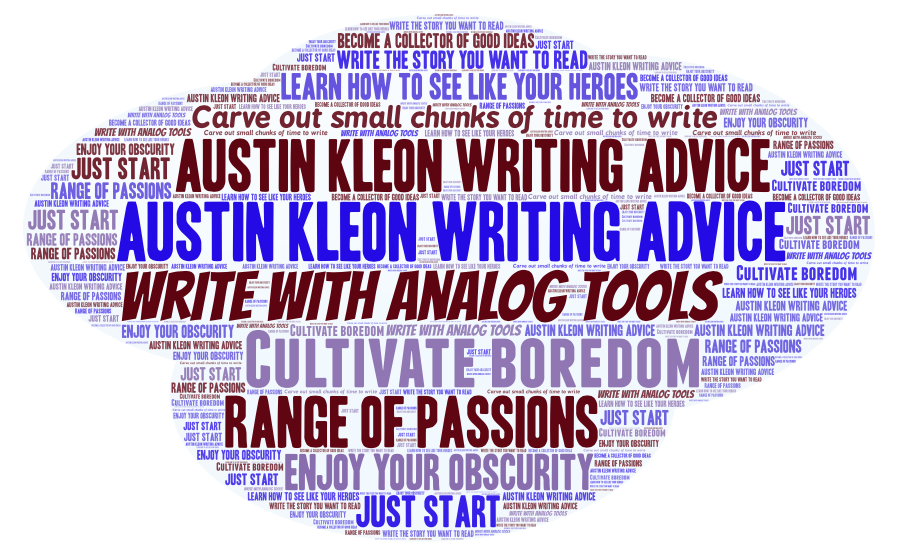
This 21 Authors Share One Piece of Advice for Writers post by Robert Lee Brewer from Writer’s Digest could easily be a springboard for 21 separate posts. The word cloud above offers a few items from the article. Take a look.






 Word Inventions